

Symposium “Convivium. Food Systems at the Limit”
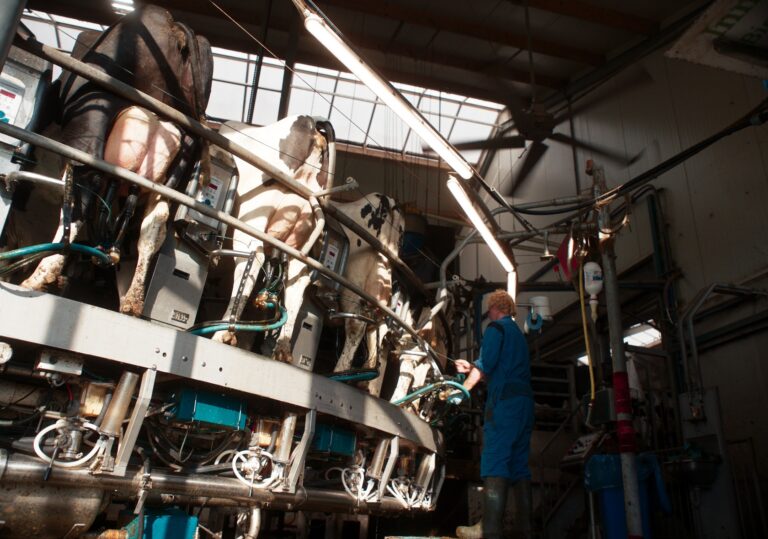
April 23, 2026, 8:30 a.m.–7 p.m.
Where: Vorhoelzer Forum of the Technical University of Munich
Registration at: anmeldung@architekturmuseum.de
Admission: Admission is free of charge.
8:30-8:50 a.m.: Registration
8:50–9:00 a.m.: Introduction by Andres Lepik
9:00–10:30 a.m.:
Panel I GREENHOUSES: On automation, labor and climate as a service
(20 min. per presentation, followed by 30 min. Q+A)
Neal Haddaway
Gent Shehu
Solidarische Landwirtschaft München Kartoffelkombinat
Moderated by Andjelka Badnjar
10:30–11:00 a.m.: Break
11:00 a.m.–12:30 p.m.:
Panel II FARMS: On the material ecosystem of global cattle
(20 min. per presentation, followed by 30 min. Q+A)
Victor Muñoz Sanz
Sofia Nannini
Tamar Novick
Moderated by Andres Lepik
12:30–1:30 p.m.: Lunch
1:30–3:00:
Panel III LANDS: On planetary production of feed in non-urban areas, soy, grain and soil themes
(20 min. per presentation, followed by 30 min. Q+A)
Nikos Katsikis
Mark Titley
Sinan von Stietencron
Moderated by Claudia Luksch
3:00–4:00 p.m.:
Panel IV FISH: Can small scale fisheries be an alternative to the industrial fishing?
Conversation between André Tavares and Diego Inglez de Souza, moderated by
Stefan Pielmeier
6:00–7:00 p.m.:
Keynote Lecture by Raj Patel
Ernst von Siemens Auditorium in the Pinakothek der Moderne
Introduction by Andres Lepik
April 24, 2026, 10:00 a.m.–1:00 p.m.
Extended guided tour through the exhibition “Convivium. Food Systems at the Limit” with authors, curators and designers
Architekturmuseum der TUM
Registration at: anmeldung@architekturmuseum.de
Admission is free of charge
10:00–10:30 a.m.: Registration
10:30 a.m.–1:00 p.m.: Tour
Programme Highlights:
Andres Lepik and Andjelka Badnjar: Introduction, conclusion and moderation
Amelie Steffen, Maximilian Atta, and Jan Müller: Exhibition design
Oykü Tok: Materials
Nicole Huminski, Víctor Muñoz Sanz and Nikolai Huber: The film “The True Type”
Dániel Szalai: Artist presentation
Johannes Schwartz: Photography for the exhibition
Kees de Klein: presentation of the mural “Serving Suggestions”
+ Víctor Muñoz Sanz, Sofia Nannini, Gent Shehu, Neal Haddaway, André Tavares, Nikos Katskis
Short biographies of the participants
Maximilian Atta completed his Bachelor's degree in Architecture at the Bauhaus University Weimar, including a semester abroad at the Glasgow School of Art. He then gained professional experience in Berlin and Zurich. He is currently completing his Master's degree at TUM, where he works at the Chair of Architectural History and Curatorial Practice, contributing to research and exhibition projects.
Andjelka Badnjar is a curator at the Architecture Museum of TUM, an architect, and a postdoctoral researcher at the Chair of Architectural History and Curatorial Practice at the Technical University of Munich. Her research interests focus on the study of collective building practices and the connections between social theory and the collective production of architecture. Most recently, she co-curated the exhibition Trees, Time, Architecture! Designing in Transition* at the Architecture Museum of TUM (2025).
Neal Haddaway is a photographer and journalist with more than twenty years of experience in environmental research. His work examines the social and environmental impacts of food systems and their supply chains. His practice combines visual storytelling with scientific research and participatory ethnography.
Nikolai Huber is a cinematographer based in Munich. His character-driven work has been screened at venues including the Museum of Modern Art in New York and the Toronto International Film Festival (TIFF), and has received awards at the International Documentary Film Festival Amsterdam (IDFA), Camerimage, and the German Camera Prize. His recent projects include the feature film Bubbles and the documentary No More Trouble, which premiered in Rome in 2024.
Nicole Humiński is a German-Polish film director. Her narrative short film But I Never Asked premiered at PÖFF Shorts during the Tallinn Black Nights Film Festival in 2024. She received the German Camera Prize for Editing in 2025 for her film Ich gehe ja in meinem Leben irgendeinm Zwang aus (I Avoid Any Coercion in My Life). Humiński collaborates with institutions such as the Architecture Museum of the Technical University of Munich (TUM), the German Polish Institute, and the Munich Documentation Centre for the History of National Socialism.
Diego Inglez de Souza is an architect with a PhD in History, Architecture, and Urbanism from the University of São Paulo. He is currently a research associate at the Faculdade de Arquitectura da Universidade do Porto (FAUP), where his research focuses on fisheries, cultural heritage, and transatlantic modernities. He is the author of Reconstruindo Cajueiro Seco (2010) and co-author of Arquitectura do bacalhau e outras espécies (2022).
Nikos Katsikis is a tenure-track assistant professor of urban design at TU Delft. He works at the intersection of urbanization theory, territorial design, and geodata analysis. His research examines the socio-metabolic relationships between cities and their “operative landscapes” of production, circulation, and disposal. He is also a co-founder of the research platform Terra Urbis.
Kees de Klein works as a visual designer in Amsterdam. His practice is strongly collaborative and moves between cultural projects and commissioned work. Together with researchers, artists and institutions, he develops visual worlds that translate complex content into clear, powerful and often tactile visuals – from graphic designs and publications to digital interfaces and photographic works.
Andres Lepik is the director of the Architecture Museum at the Technical University of Munich (TUM) and Professor of Architectural History and Curatorial Practice at TUM. Previously, he worked as a curator at the Neue Nationalgalerie in Berlin and in the Architecture and Design Department of the Museum of Modern Art in New York. Among the more than thirty exhibitions he has curated at the Architecture Museum of TUM are AFRITECTURE – Building with the Community (2013–14) and Who’s Next? Homelessness, Architecture, and the City (2022–23).
Jan Müller is a master's student in architecture at TUM. His bachelor's thesis received an honorable mention at the 2025 BDA Study Prize, awarded by the Bavarian chapter of the Association of German Architects (BDA). In addition to his teaching experience and work in architectural firms in Germany and Switzerland, he participated in the 18th Venice Architecture Biennale in 2023 as a member of Atelier35, where the group created a temporary pavilion.
Víctor Muñoz Sanz is an Assistant Professor of Urban Design at TU Delft. His work involves developing and leading research projects that critically examine the architecture and urban planning of the workplace—past, present, and future. He investigates how the design of productive landscapes is intertwined with technological developments and various forms of organization and management.
Sofia Nannini is an Assistant Professor of Architectural History at the Polytechnic University of Turin. In her current research project, “Animal Farm: An Architectural History of Intensive Animal Farming (1570–1992),” she investigates the development and spatial expressions of intensive animal farming practices. She received a Starting Grant from the European Research Council (ERC) for this project in 2025.
Tamar Novick is a historian of science, technology, and the environment. Her research focuses on agriculture, animals, bodily waste, and fertility in Palestine/Israel. Her book, Milk and Honey: Technologies of Plenty in the Making of a Holy Land (MIT Press, 2023), was awarded the 2024 George Perkins Marsh Prize for best environmental history book and was a finalist for the 4S Rachel Carson Prize. She is the editor of three special issues of the journals Technology and Culture, Journal of Material Culture, and Osiris.
Raj Patel is a Research Professor at the Lyndon B. Johnson School of Public Affairs at the University of Texas at Austin. He is a member of the International Panel of Experts on Sustainable Food Systems (IPES-Food) and the Council of Progressive International, and is a recipient of the James Beard Foundation's Leadership Award. His publications include Stuffed and Starved: The Hidden Battle for the World Food System and, with Jason W. Moore, A History of the World in Seven Cheap Things, as well as Inflamed, which he co-authored with Rupa Marya.
Stefan Pielmeier studies architecture at TUM and the Aarhus School of Architecture. In his academic work, he explores how cultural heritage, architecture, and transformation processes intertwine with regard to future spatial practices. He has participated in various research and project work addressing issues of cultural heritage in both academic and curatorial settings. He also works as a curatorial assistant, contributing to the research and exhibition work of the TUM Architecture Museum.
Johannes Schwartz is a German-born photographer who lives and works in Amsterdam. He studied photography at the Gerrit Rietveld Academie, where he later headed the photography department from 2004 to 2010 and continues to teach. His work has been presented in numerous museums and galleries, including the Stedelijk Museum Amsterdam, the Van Gogh Museum, the Fotomuseum Den Haag, and the Pratt Photography Gallery in New York. In 2011, he represented the Netherlands at the Venice Architecture Biennale with the exhibition Opera Aperta / Loose Work.
Gent Shehu is a PhD student in Urban Design at TU Delft. His research project investigates how automation and artificial intelligence are transforming contemporary production environments—particularly the data-driven Dutch greenhouse landscape. He holds a Master's degree in Architecture and Urban Design from Polis University in Tirana and a postgraduate diploma from The Berlage in Delft. Alongside his research, Shehu works as an architect in his hometown of Skopje.
Amelie Steffen earned her Bachelor's degree in Architecture from the Bauhaus University Weimar and also completed a semester abroad at the Glasgow School of Art; she gained her first professional experience in Berlin and Zurich. She is currently pursuing a Master's degree in Architecture at the Technical University of Munich and contributes to research projects and exhibition development at the Chair of Architectural History and Curatorial Practice.
Sinan von Stietencron is a philosopher and the lead coordinator for Education and the Soil Network at the Foundation for Art and Nature. He supports the EU-funded project "SOIL: Our Invisible Ally" as Head of Communications and also coordinates the Nutrition and Health panel of the Forum Nantesbuch, a transdisciplinary network of experts dedicated to living soils.
Dániel Szalai is a Hungarian visual artist, photographer, and researcher. His work explores the relationship between humans and animals and also examines socio-political and economic issues. He is currently pursuing a PhD in Multimedia Art at the Moholy-Nagy University of Art and Design in Budapest.
André Tavares is an architect and researcher at the Faculty of Architecture at the University of Porto (FAUP). He leads the European Research Council (ERC)-funded project “Fishing Architecture.” He is also the founder of the publishing house Dafne Editora in Porto. His publications include The Anatomy of the Architectural Book (2016), Vitruvius Without Text (2022), and Architecture Follows Fish (2024).
Mark Titley holds a PhD in Conservation Ecology from Durham University and works as a Senior Research Associate at the non-profit organization Global Canopy in Oxford. There, he is involved with Trase—a data-driven transparency initiative founded in 2015 that investigates and exposes global agricultural supply chains linked to deforestation. His research focuses on land-use change, biodiversity loss, the impacts of climate change, and the political ecologies of international trade.
Öykü Tok is a research associate at the Chair of Architecture and Design at the Technical University of Munich, where she is also pursuing her doctorate. Her research focuses on bioregional prototyping using agricultural residues within the framework of the EU-funded BIOARC project. Her emphasis is on regenerative material practices – in particular, the circular reuse of industrial and agricultural by-products for architectural applications.